| Free Shipping on All Domestic Orders Over $100! | ||||||||
Hand Forged Wood Carving Knives Since 1987 |


| |||||||
| ||||||||
|
|
| |||||||||||||||||
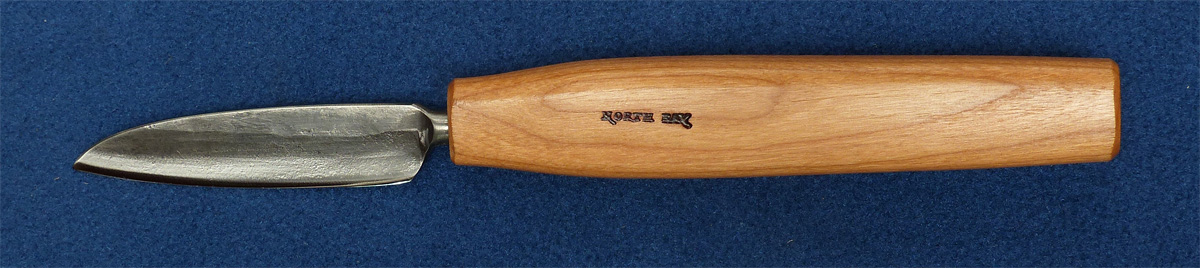
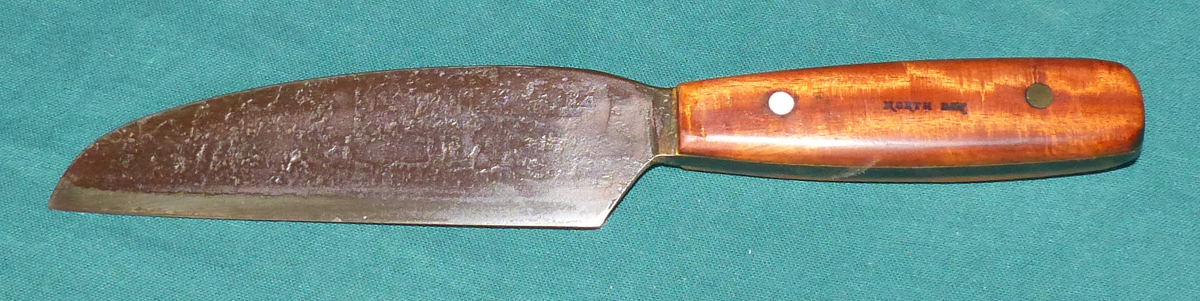
Paring KnifeVery similar to my straight knives for wood carving - my special bevel forging process, high carbon steel, fully hardened, finely beveled, razor sharp. The Cherry wood handle is given a satin varnish finish, to make it stand up to kitchen use.
Blade is 3 inches long, handle is 6 inches long. PN $110.00
| |||||||||||||||||||||||||||||||||||||||||||||||||||||||||||||
| |||||||||||||||||||||||||||||||||||||||||||||||||||||||||||||
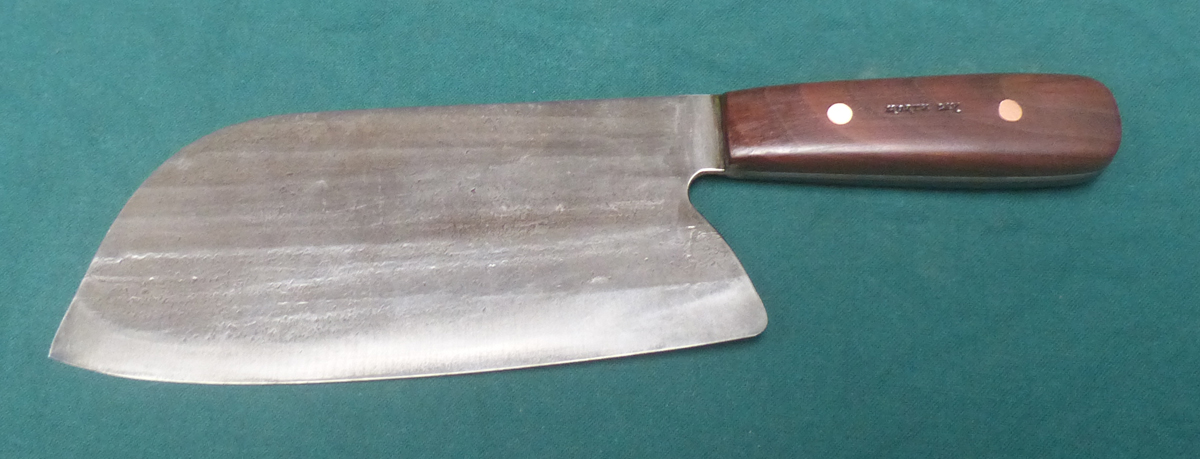
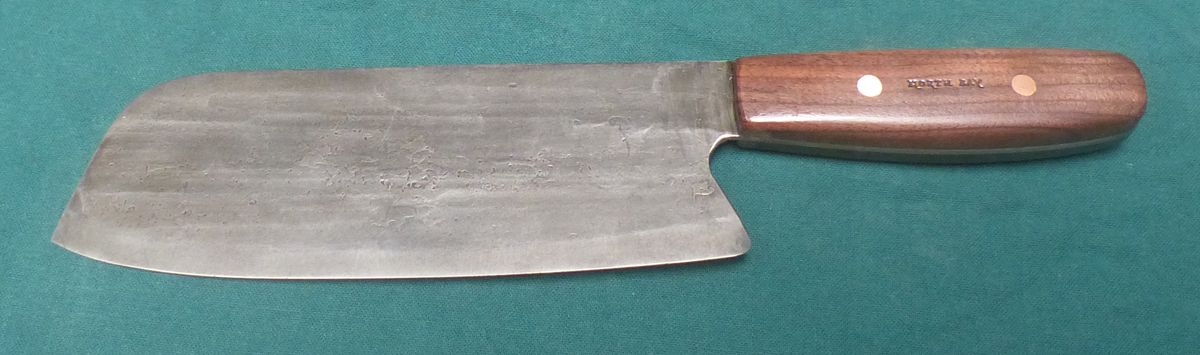
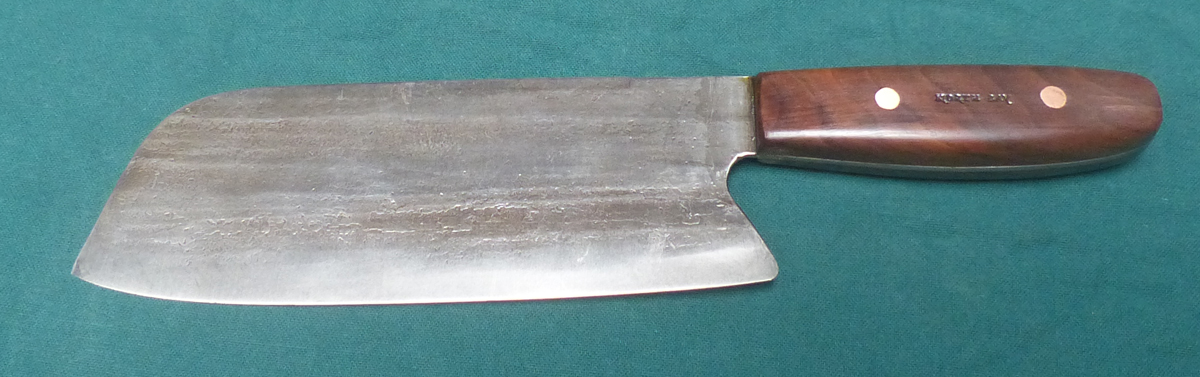
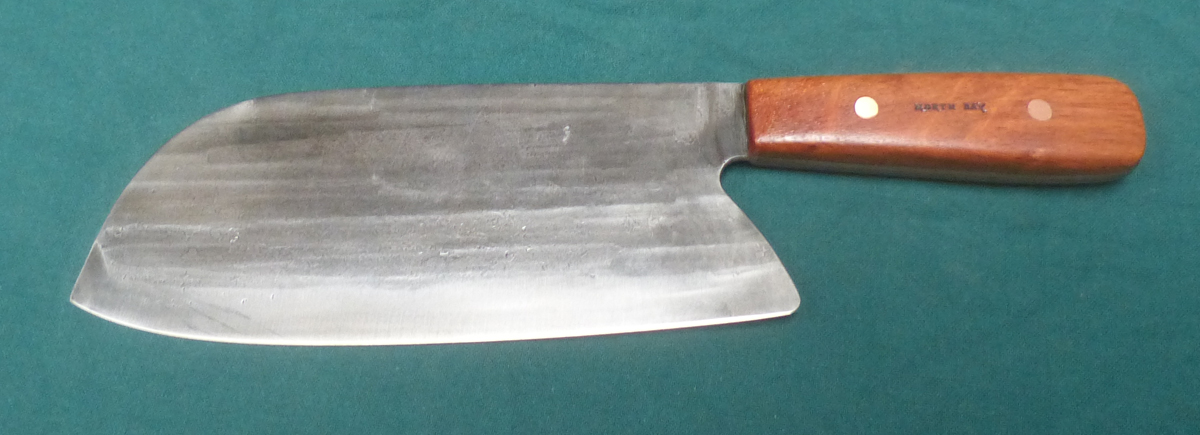
Seconds |
| ||||
|
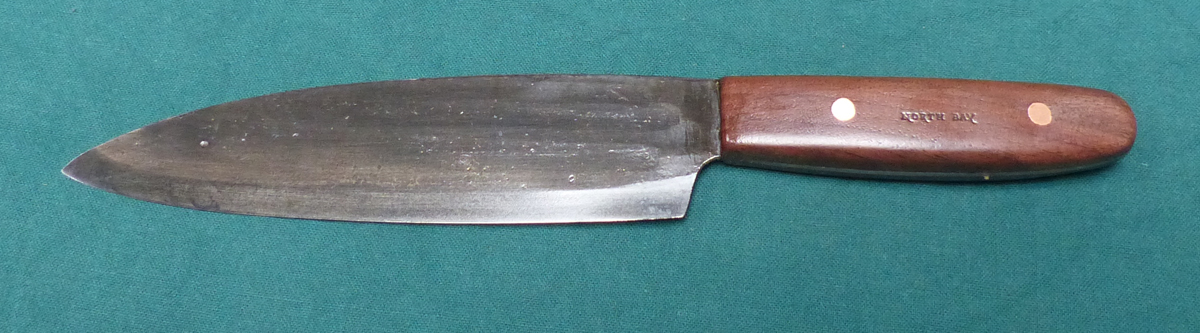
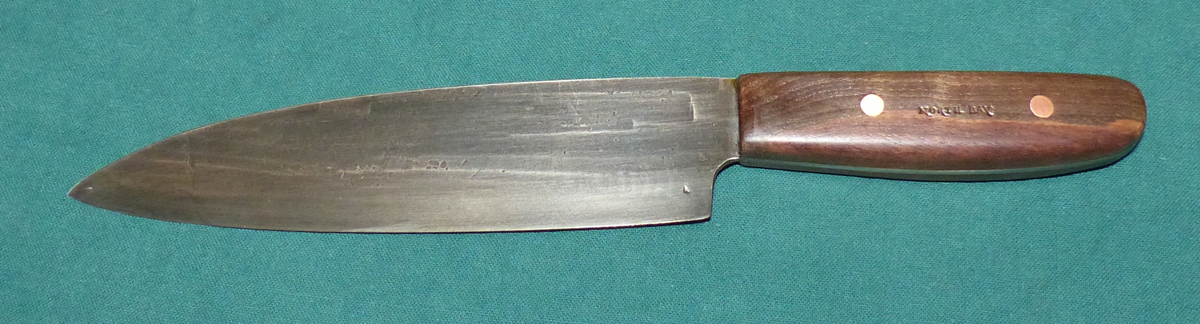
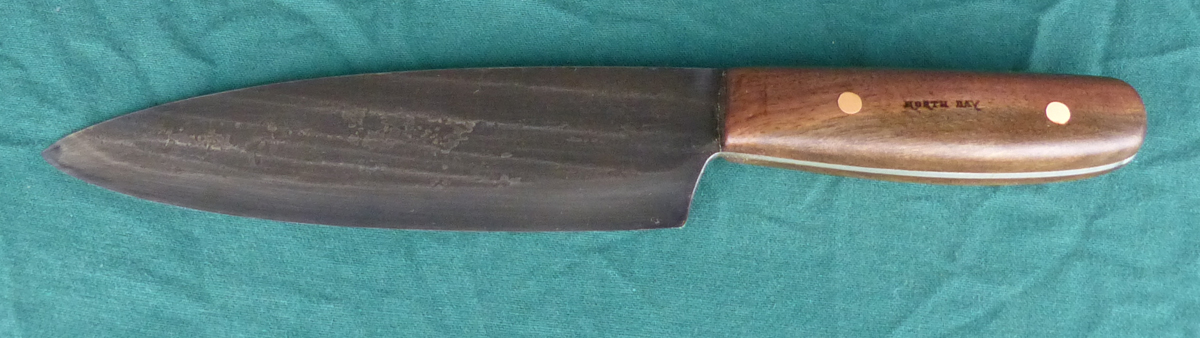
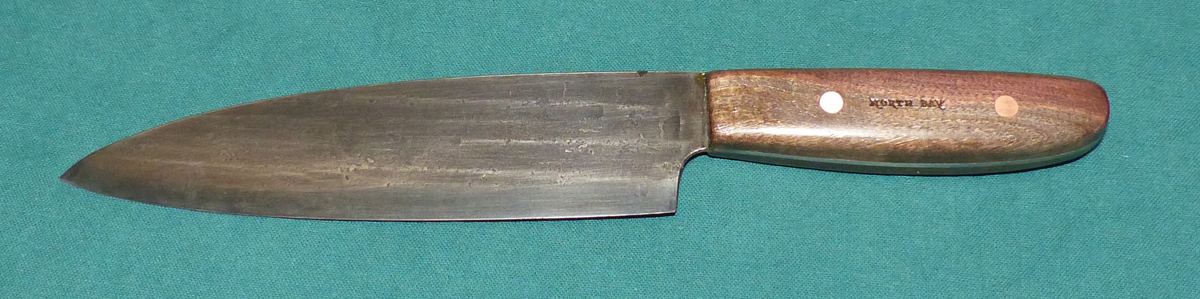
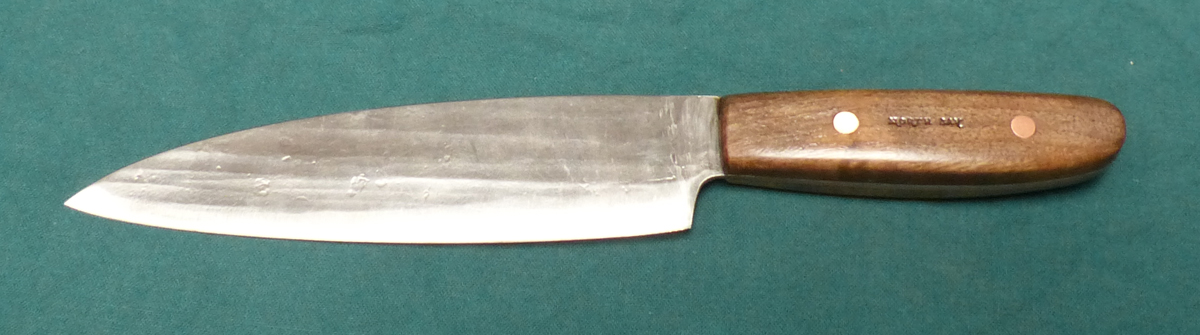
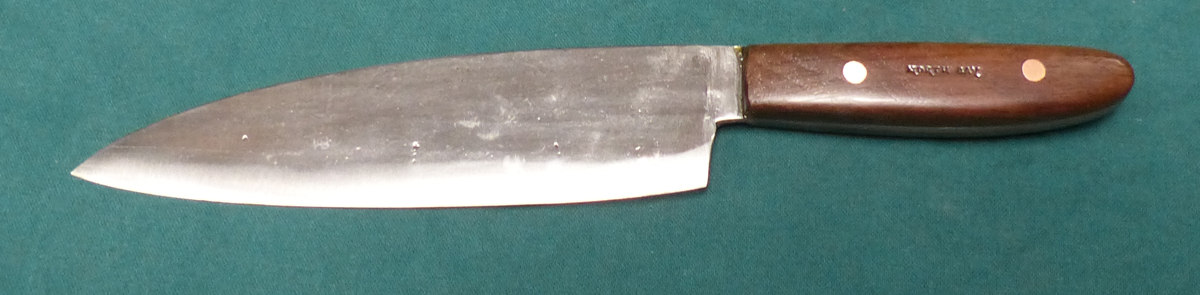
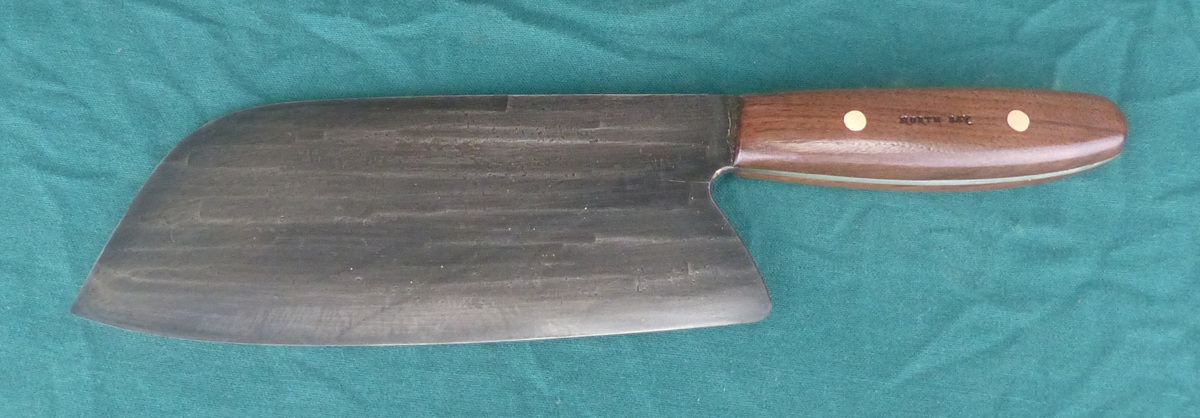
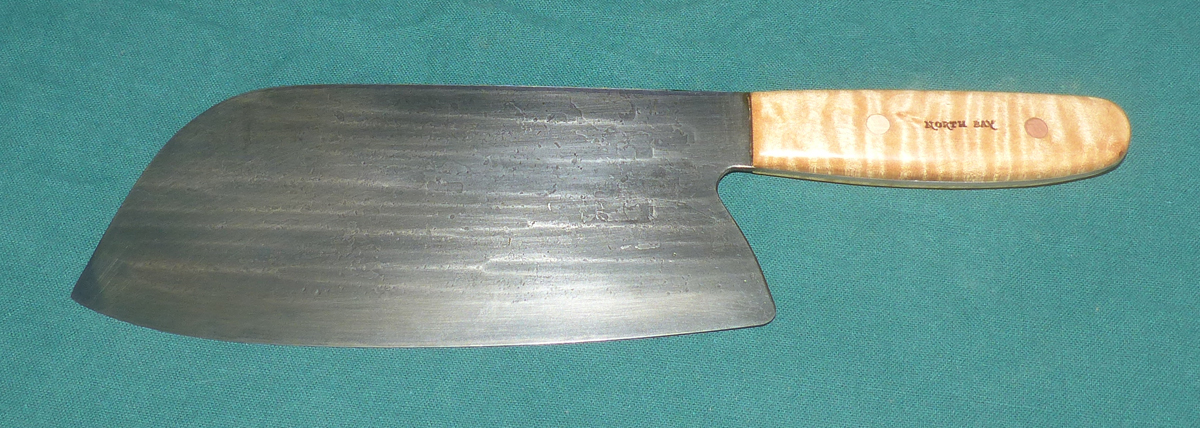
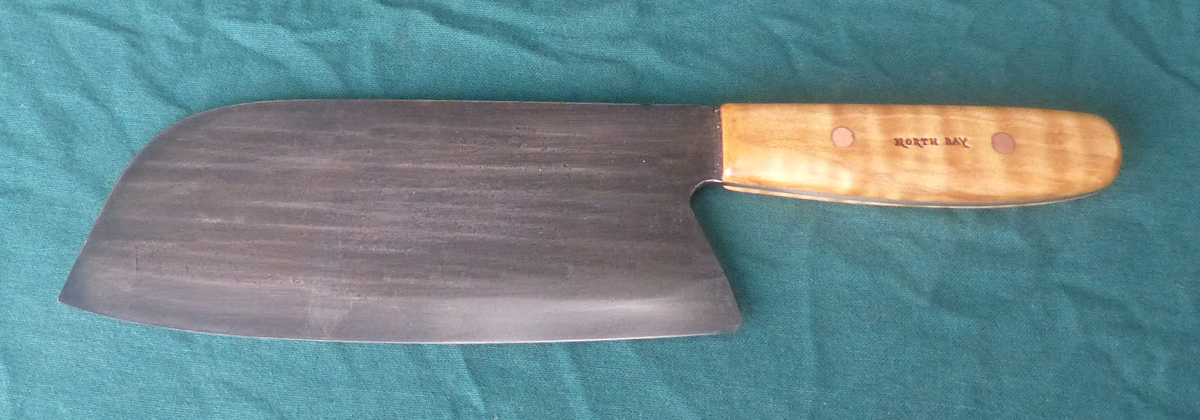
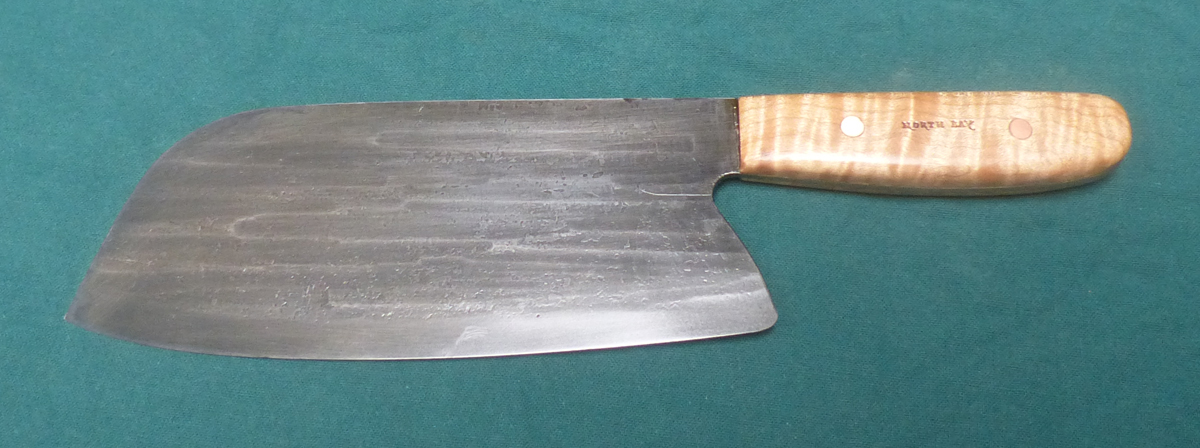
My latest batch of cutlery knives took a great deal of aggressive forging because they are so finely tapered (entailing a lot of high stress "packing" at quite low forging temps).
All seemed to be going well until I cleaned up the surfaces with wire brushing - and found they all had cracks along the entire lengths
of the blades! Wondering whether these were actual structural failures or just surface cracks, I cut a 1/4" slice off the ends and
tested by holding one end in a vice and cold hammering over the rest, to see where they would fail. None of them broke after being
bent 90 degrees. So they were surface cracks that would certainly not fail with any use as cutlery. But I don't feel OK about selling
these blades with such clear blemishes at full price, thus the reduction in price of about 20%. I fully guarantee these against breakage. Furthermore,
because these were forged with my usual aggressive methods of forging through very low forging temperatures to pack the grains - these blades are
tougher and harder than the ones I am selling at full price. After discussing the problem with a metallurgist, it seemed the problem was that I was forging too aggressively and at too low temperature. With those changes, I no longer had any surface cracks. Those knives are "firsts" and are available on my main Cutlery page. Please click the pictures to enlarge. | |||||
Fine Chef's Knives | |||||
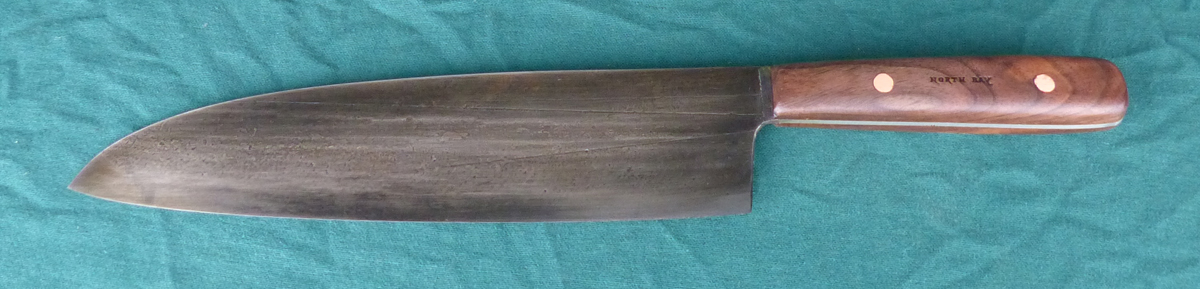 |
SK-1 $ 290 Sold Gun blued blade is .10" thick spine, 9.0" long, 2.1" wide Handle is Walnut, very small size with .95" max. width, 4.5" long
| ||||
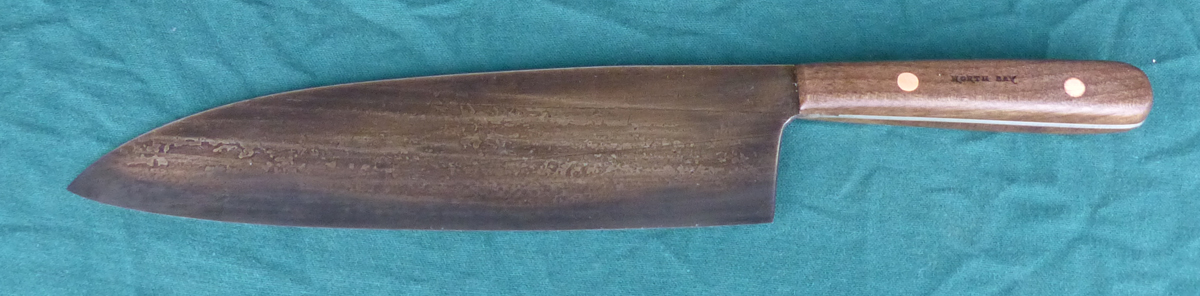 |
SK-2 $ 290 Sold Gun blued blade is .10" thick spine, 8.8" long, 2.1" wide Handle is Walnut, very small size with .85" max. width, 4.5" long
| ||||
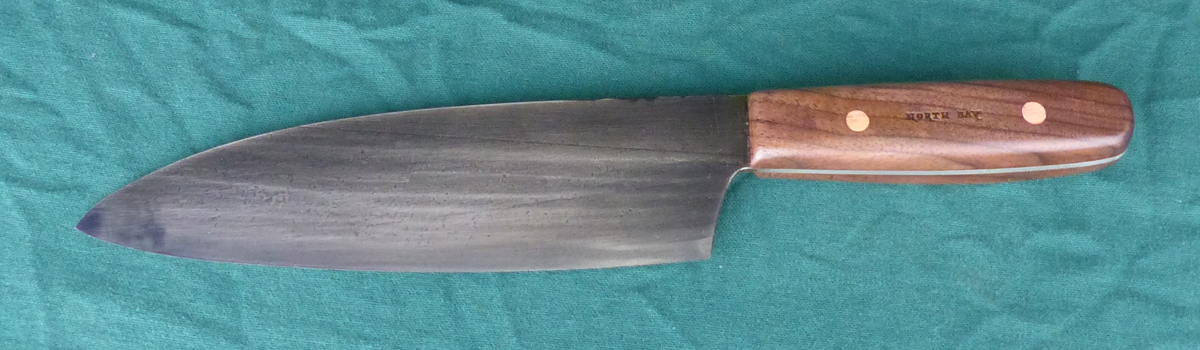 |
SK-3 $ 275 Sold Gun blued blade is .10" thick spine, 7.0" long, 2.0" wide Handle is Walnut, small size with 1.0" max. width, 4.5" long
| ||||
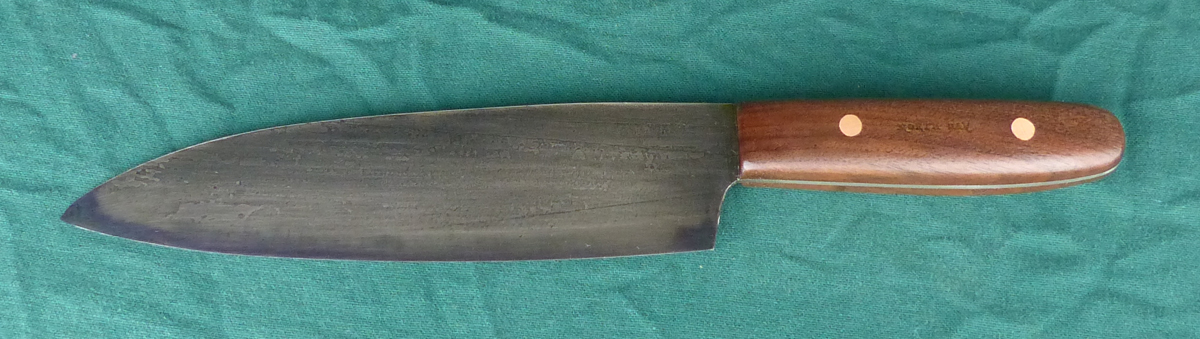 |
SK-4 $ 265 Sold Gun blued blade is .08" thick spine, 7.2" long, 1.8" wide Handle is Walnut, small size with 1.0" max. width, 4.5" long
| ||||
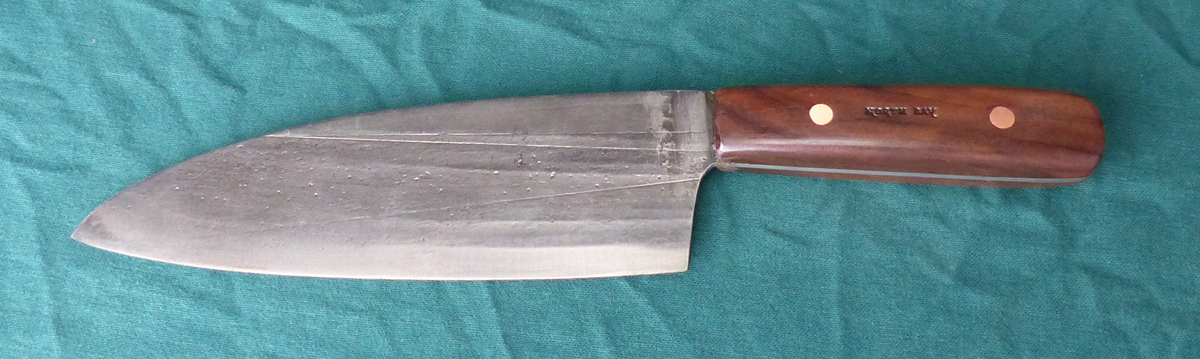 |
SK-5 $ 265 Sold Buffed blade is .10" thick spine, 7.0" long, 2.2" wide Handle is Walnut, medium size with 1.1" max. width, 4.5" long
| ||||
 |
SK-6 $ 250 Sold Buffed blade is .10" thick spine, 7.0" long, 1.8" wide Handle is Walnut, medium size with 1.0" max. width, 4.5" long
| ||||
Fine Cleavers | |||||
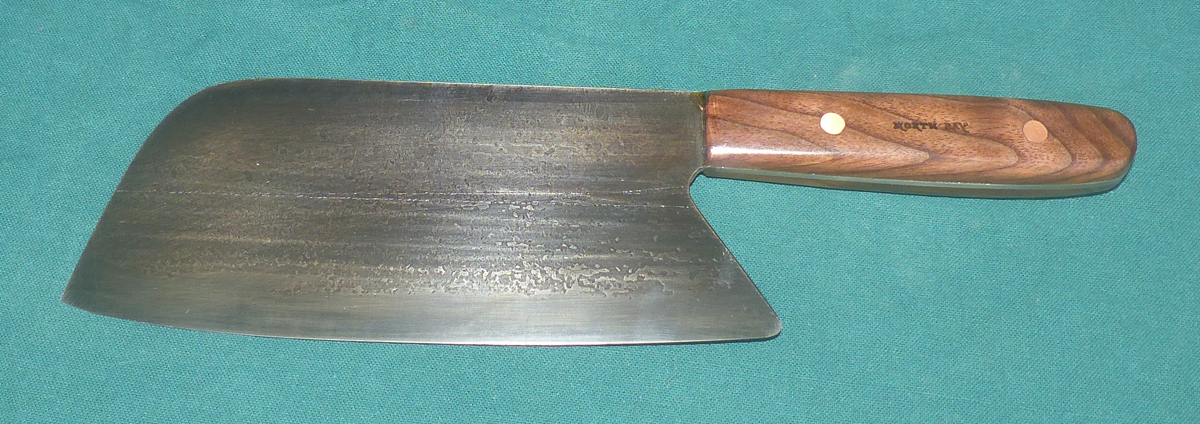 |
SF-1 $ 315 Sold Gun blued blade is .10" thick spine, 7.7" long, 3.1" wide Handle is Walnut, small size with 1.0" max. width, 4.5" long
| ||||
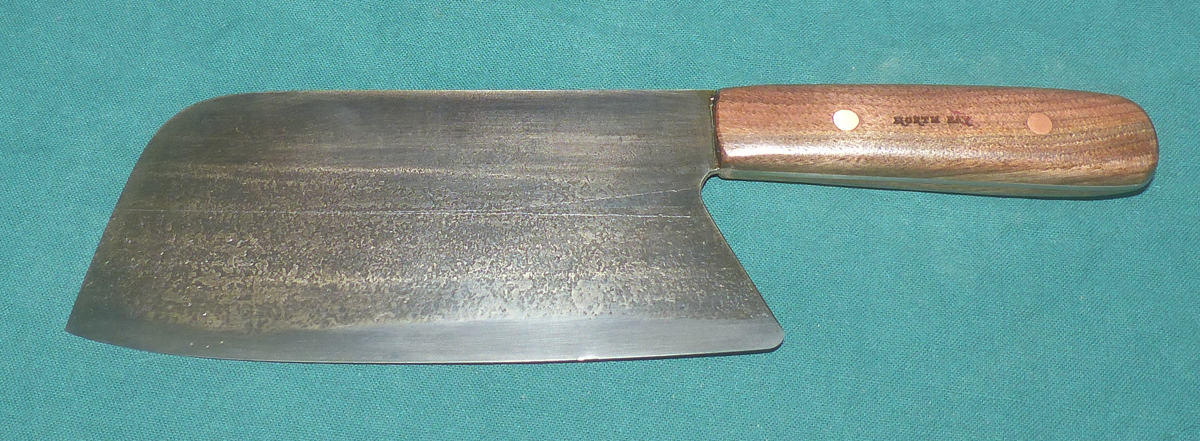 |
SF-2 $ 315 Sold Gun blued blade is .10" thick spine, 7.3" long, 3.1" wide Handle is Walnut, medium size with 1.1" max. width, 4.5" long
| ||||
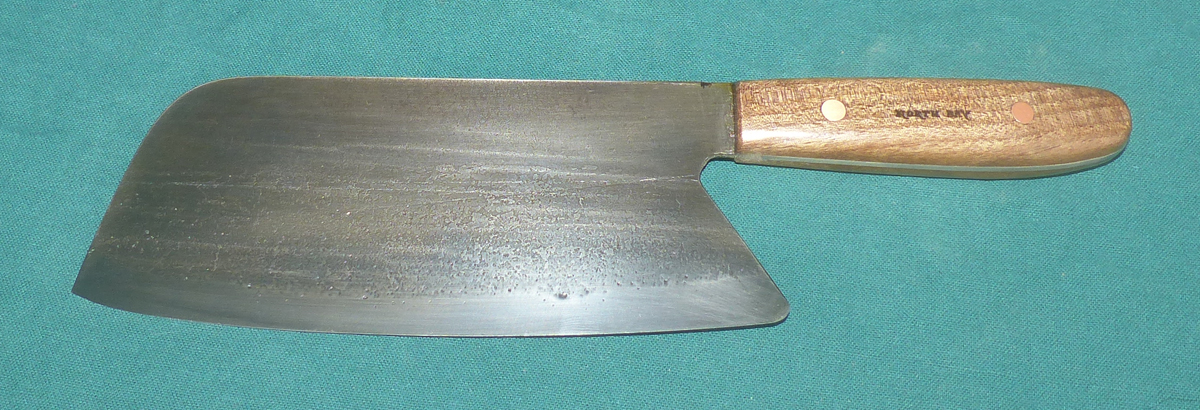 |
SF-3 $ 315 Sold Gun blued blade is .10" thick spine, 7.6" long, 3.0" wide Handle is Walnut, small size with 1.0" max. width, 4.5" long
| ||||
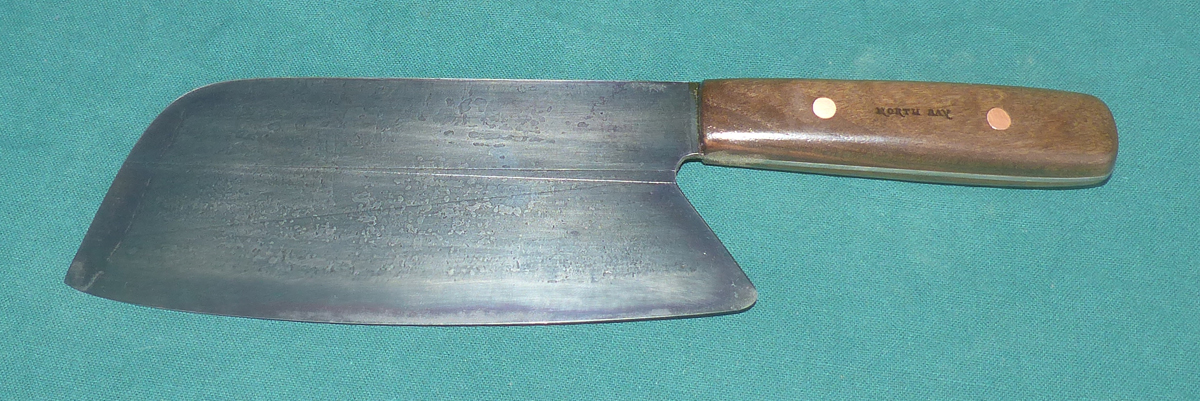 |
SF-4 $ 315 Sold Gun blued blade is .10" thick spine, 7.4" long, 2.9" wide Handle is Walnut, medium size with 1.1" max. width, 4.5" long
| ||||
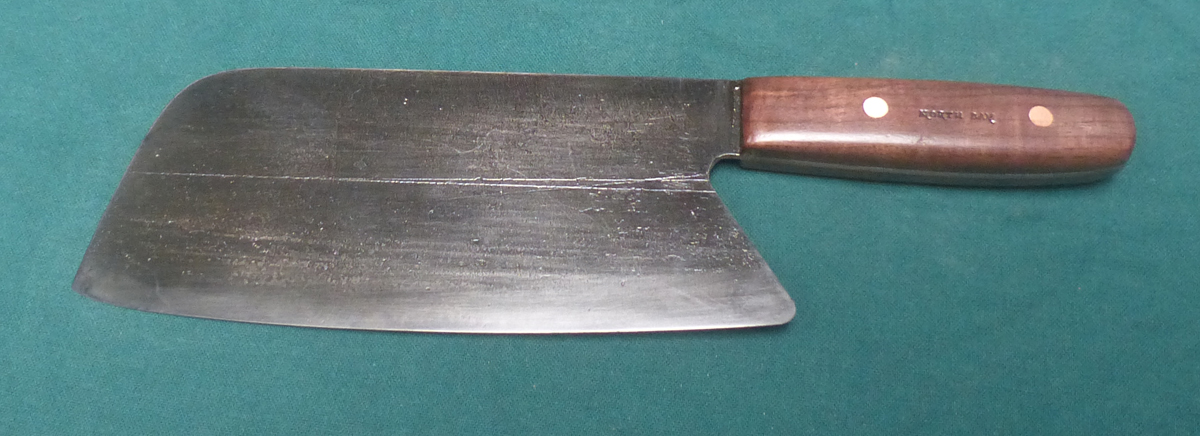 |
SF-5 $ 315 Sold Gun blued blade is .10" thick spine, 7.7" long, 3.1" wide Handle is Walnut, small size with 1.0" max. width, 4.5" long
| ||||
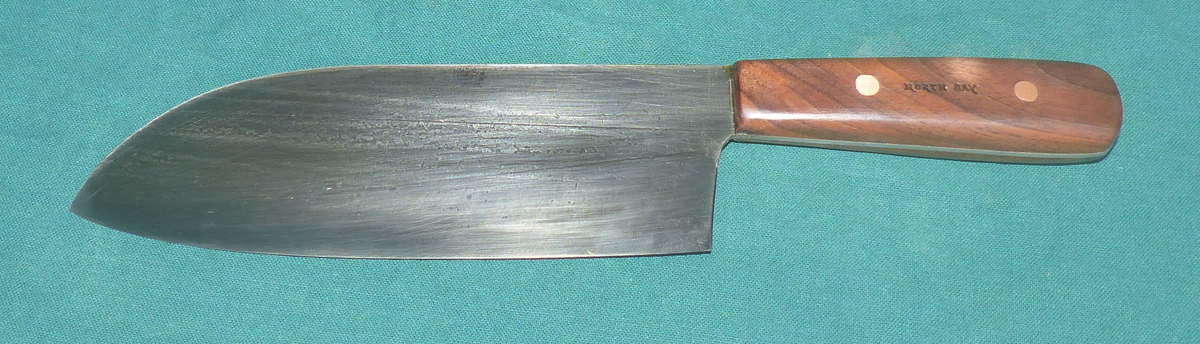 |
SF-6 $ 295 Sold Gun blued blade is .10" thick spine, 7.2" long, 2.4" wide Handle is Walnut, medium size with 1.15" max. width, 4.5" long
| ||||
Heavy Cleavers | |||||
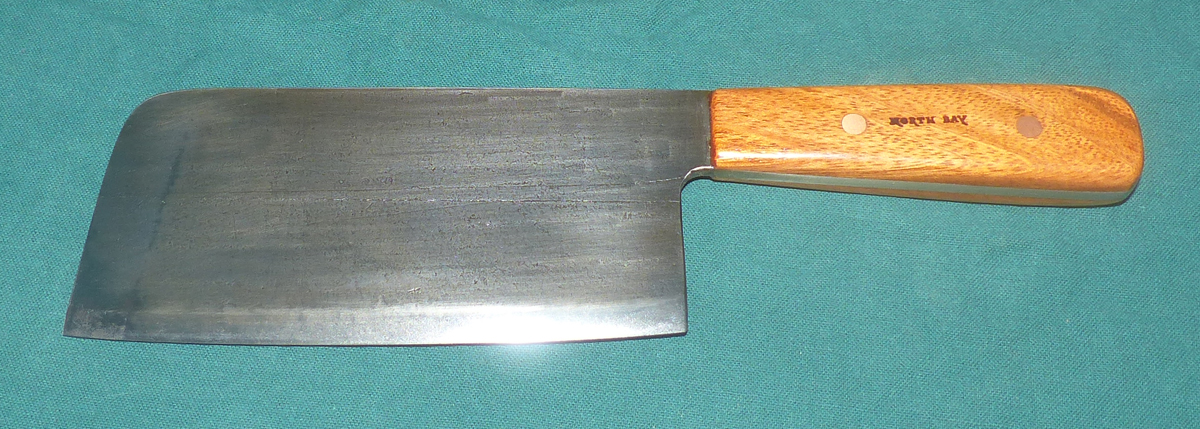 |
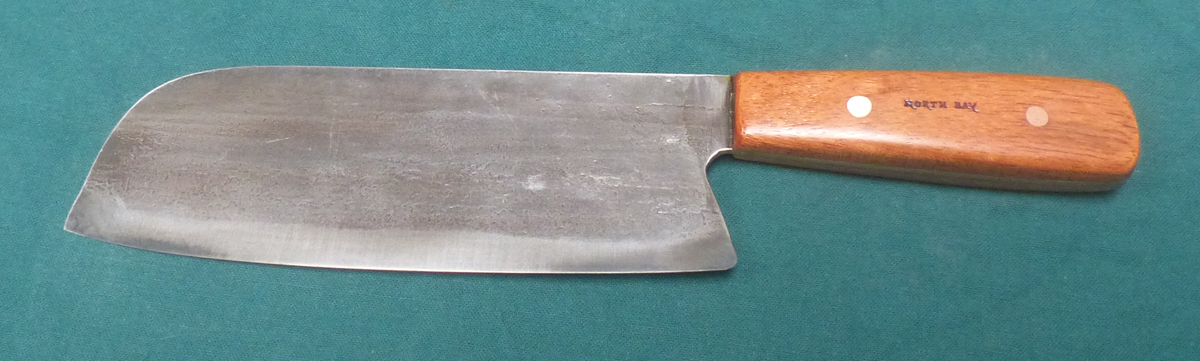
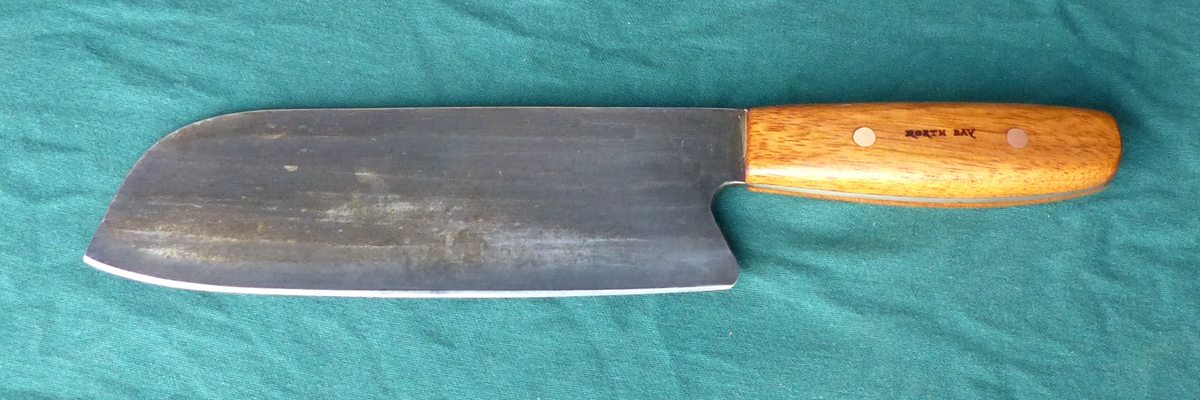
SH-1 $ 255 Sold Gun blued blade is .20" thick spine, 6.5" long, 3.0" wide Handle is Jatoba, large size with 1.2" max. width, 4.5" long
| ||||
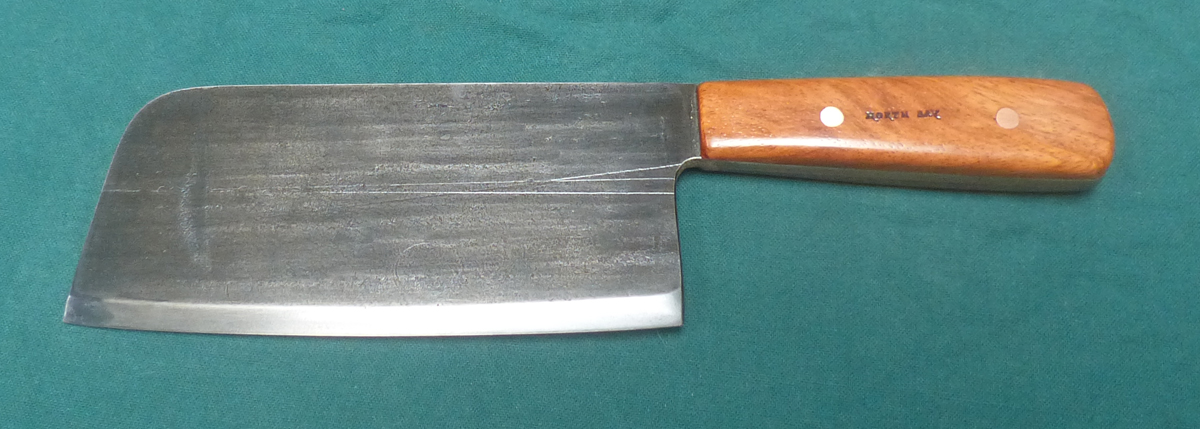 |
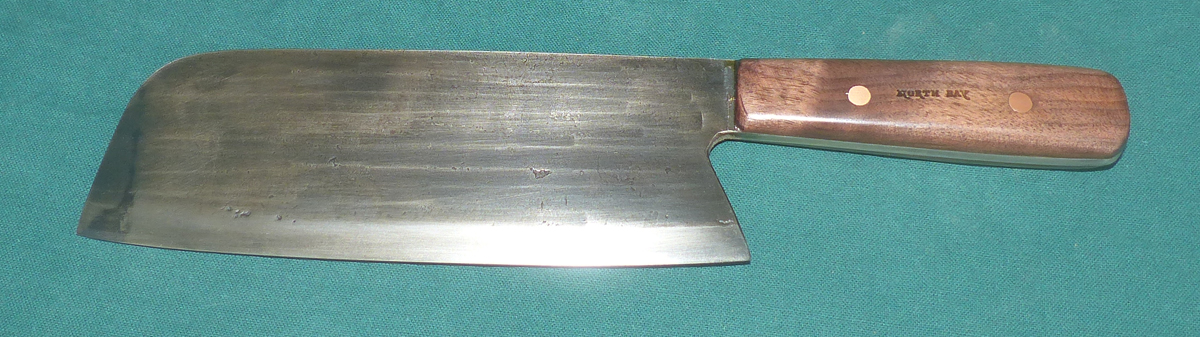
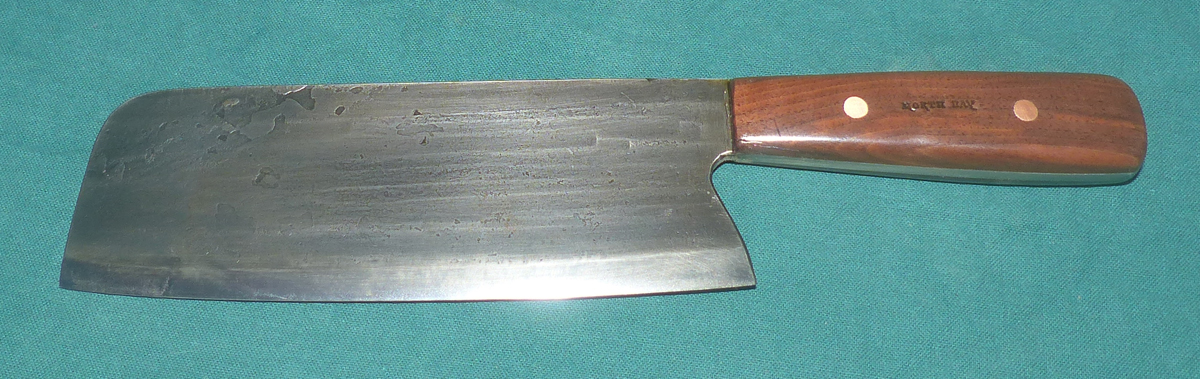
SH-2 $ 255
Gun blued blade is .20" thick spine, 6.5" long, 3.0" wide Handle is Jatoba, large size with 1.2" max. width, 4.5" long
| ||||
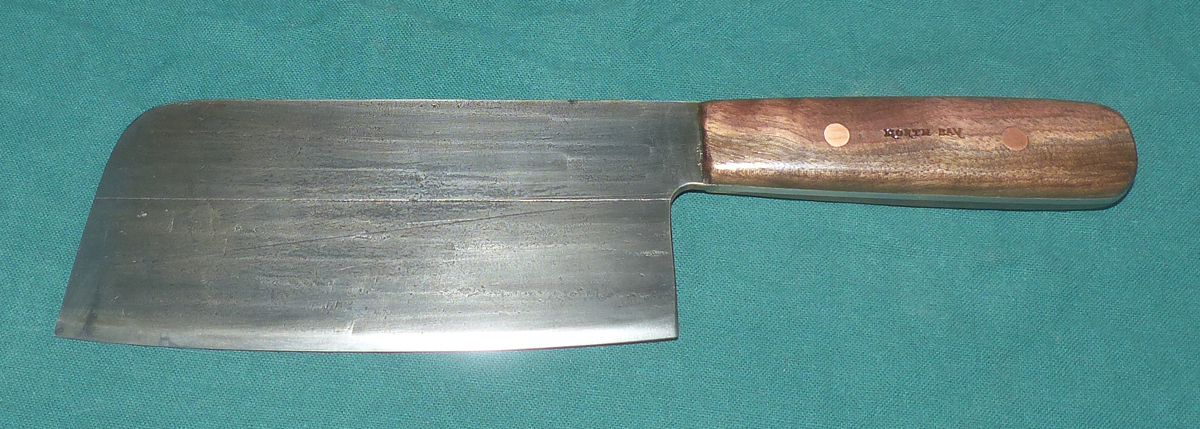 |
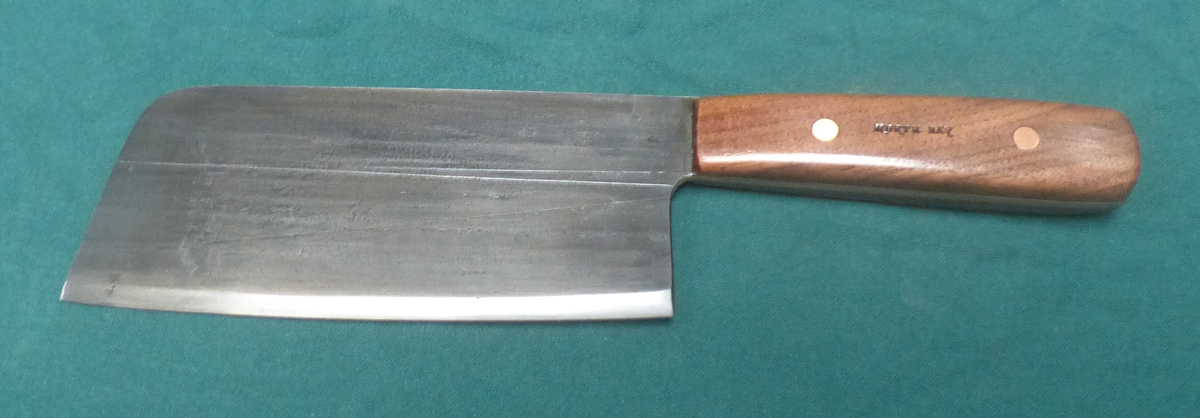
SH-3 $ 225 Sold A fairly light cleaver Gun blued blade is .13" thick spine, 6.2" long, 2.8" wide Handle is Walnut, medium size with 1.1" max. width, 4.5" long
| ||||
 |
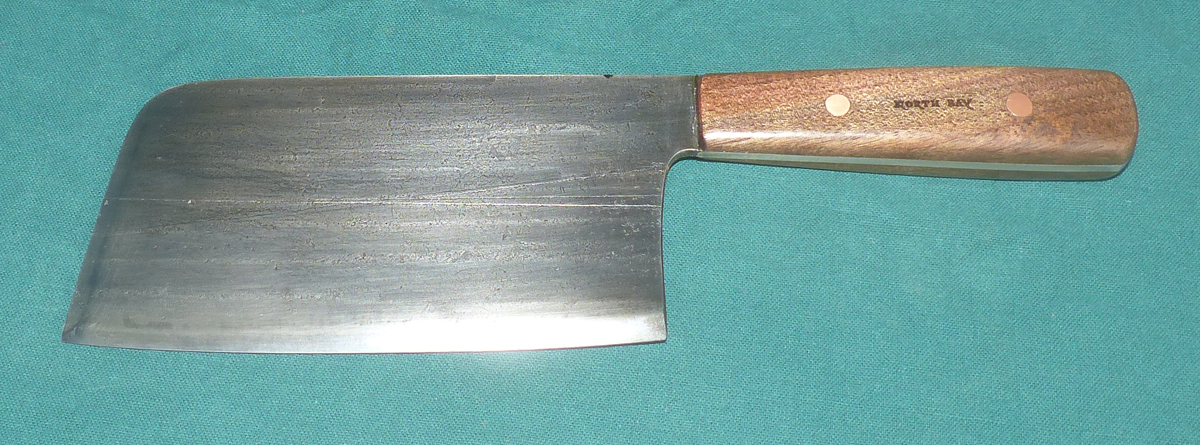
SH-4 $ 225 Sold A fairly light cleaver Gun blued blade is .13" thick spine, 6.3" long, 2.7" wide Handle is Walnut, medium size with 1.1" max. width, 4.5" long
| ||||
 |
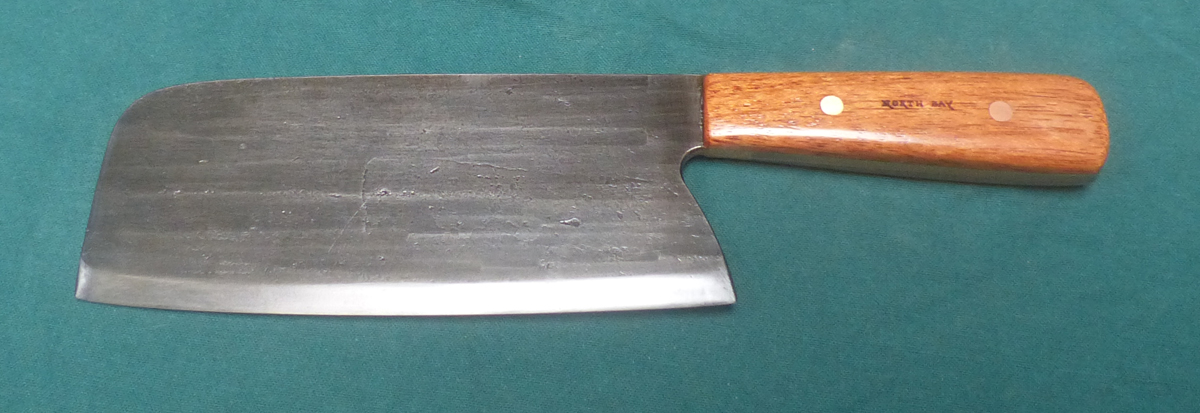
SH-5 $ 240
A fairly light cleaver Gun blued blade is .14" thick spine, 6.1" long, 3.1" wide Handle is Walnut, medium size with 1.1" max. width, 4.5" long
| ||||
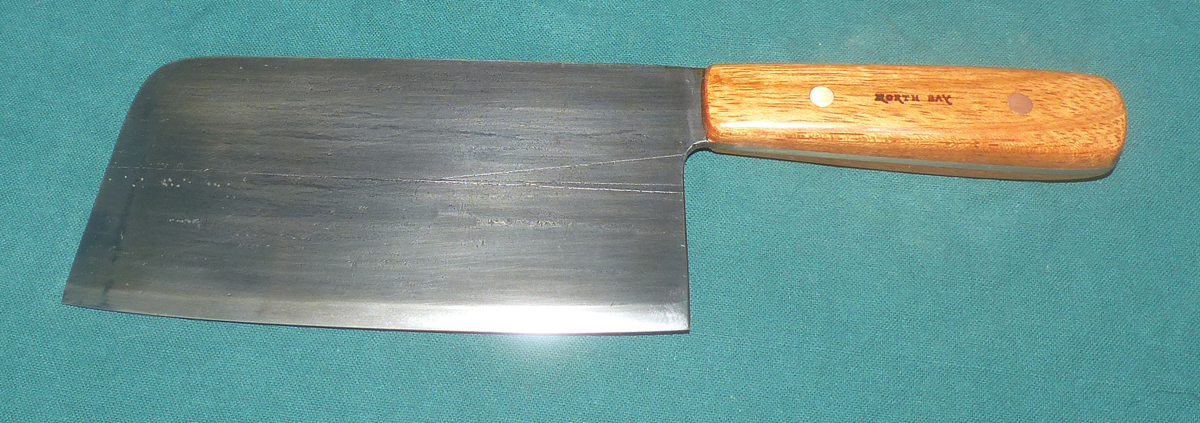 |
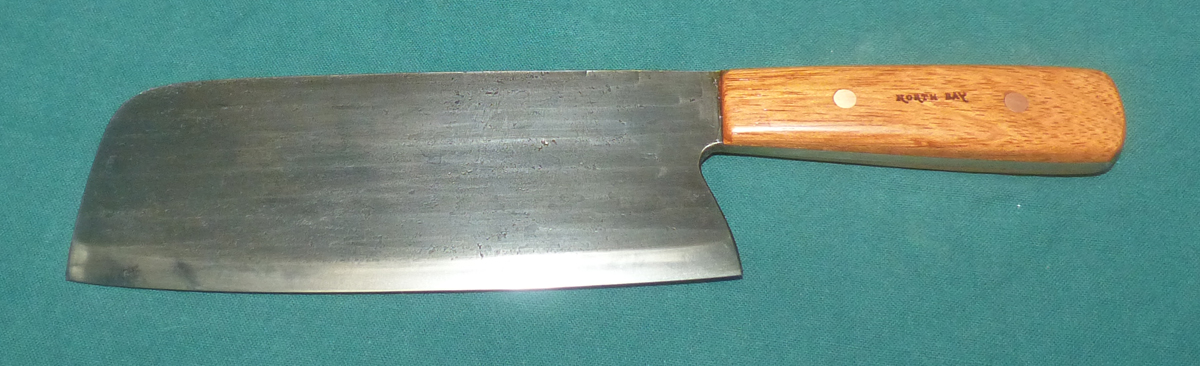
SH-6 $ 240 Sold A fairly light cleaver Gun blued blade is .14" thick spine, 6.1" long, 3.2" wide Handle is Jatoba, medium size with 1.1" max. width, 4.5" long
| ||||
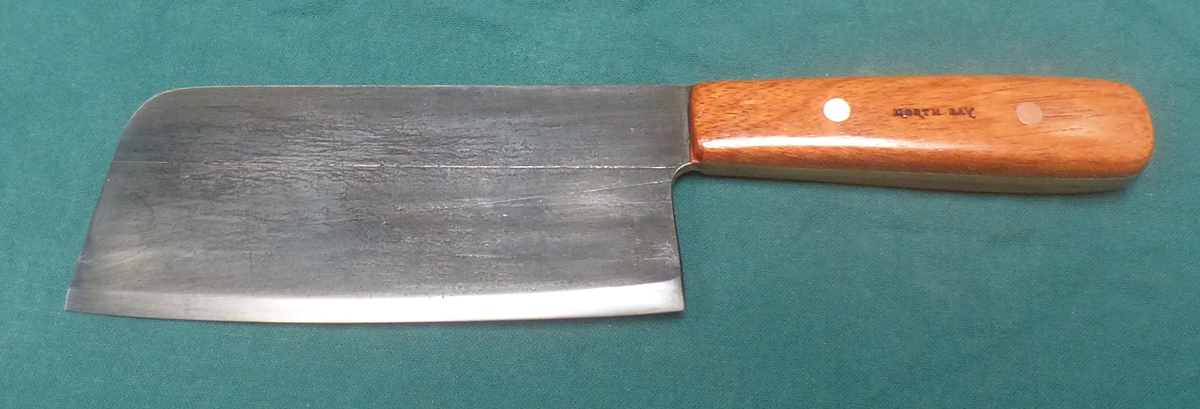 |
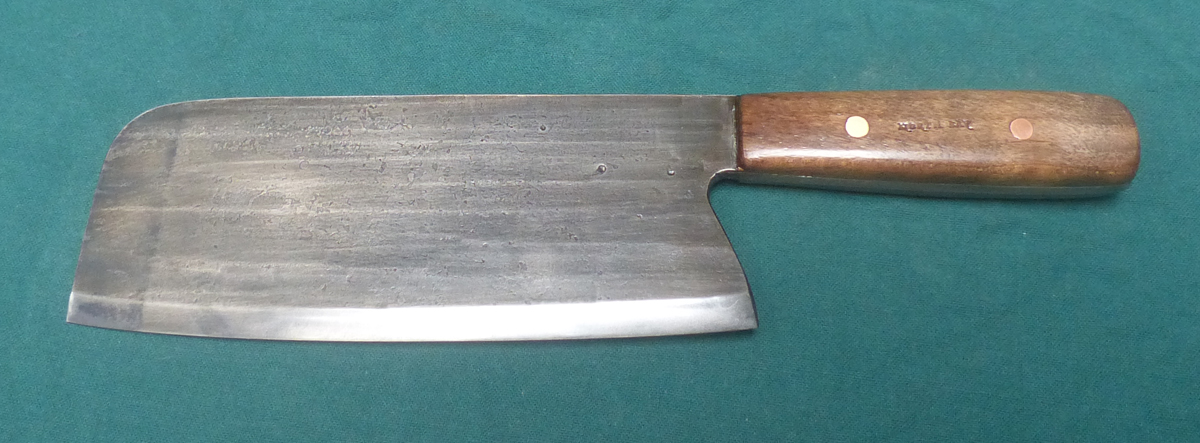
SH-7 $ 225
A fairly light cleaver Gun blued blade is .15" thick spine, 6.1" long, 2.6" wide Handle is Jatoba, medium size with 1.1" max. width, 4.5" long
| ||||
|
My carving knives are intended for serious wood carvers. They are razor sharp and can be very dangerous if used improperly. Please be careful and don't allow young people to use them unsupervised. Your satisfaction is fully guaranteed. If you have a problem of any kind with one of my knives, please let me know. I will make it right with you. |


 |